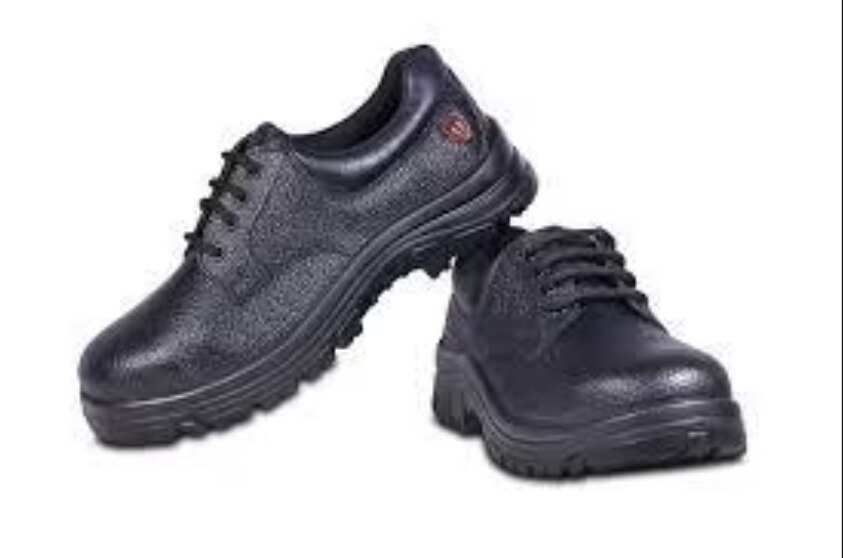
A brand name does not prove that footwear will withstand the chemicals in your workplace. By checking the exact model, test evidence, construction, exposure conditions and required footwear format, you can decide whether either option is suitable or whether you need chemical-resistant gumboots or sealed footwear instead.
Key takeaways
- Do not accept brand-level chemical protection claims; verify the exact model.
- Ask for chemical resistance test reports naming chemicals, concentrations and exposure conditions.
- Inspect lining, seams, adhesives and toe protection alongside the outsole compound.
- Choose chemical-resistant boots when liquids can enter above the ankle.
Do Jama and Tagra safety shoes have proven chemical protection?
Neither Jama safety shoes or Tagra safety shoes can be judged suitable for chemical work from the brand name alone. You need the exact model number, because toe cap, midsole, outsole compound, lining, bonding and boot height can differ between models.
A catalogue label such as “industrial” or “chemical safety shoes” does not prove protection against your chemical. Demand evidence that identifies the tested substance, concentration, temperature, contact time and exposure type. A short splash result does not prove protection during immersion, repeated wet-floor contact or liquid entering over the ankle.
Before approving Tagra safety shoes or a Jama model, request:
- The exact model number printed on the shoe, box or declaration
- The manufacturer’s declaration of conformity or certificate
- The named test standard and edition, such as EN 13832-3
- The chemical test list, including the substances and concentrations tested
- Results matching your exposure: splash, intermittent contact or continuous immersion
- Production or batch traceability
Also separate EN ISO 20345 safety-footwear certification from chemical-resistance evidence. EN ISO 20345 addresses hazards such as toe impact and compression; it does not establish resistance to a particular solvent, acid, alkali or oxidiser. Dealer location, stock availability and a generic “chemical” claim do not replace model-specific test evidence.
Which standards and documents should you demand before buying?
Demand two separate proofs: general industrial safety footwear certification and chemical-resistance certification. One does not replace the other.
Ask for these documents before approving either Jama or Tagra chemical safety shoes:
- Exact model number, including width or variant if shown on the box
- Declaration of conformity or manufacturer’s certificate naming EN ISO 20345, its edition and the certified safety features
- Chemical-resistance certificate or test report referencing EN 13832-3
- Test list naming each chemical tested, including concentration, temperature and exposure conditions
- Production or batch traceability linking the documents to the supplied footwear
- Safety data sheets (SDS) for every process chemical, mixture and cleaning agent
| Document | What it proves | What it does not prove |
|---|---|---|
| EN ISO 20345 | Toe impact or compression and other general footwear properties | Resistance to a named solvent, acid, alkali or oxidiser |
| EN 13832-3 evidence | Tested resistance to the listed chemicals under stated conditions | Universal protection against every chemical |
| Electrical marking | Antistatic, conductive or electrically insulating performance | Chemical compatibility |
| SDS plus supplier data | Whether the tested chemicals match your actual inventory | Protection when the concentration or exposure differs |
A label saying “chemical resistant” is incomplete without the chemical list and test evidence. “Industrial” or “laboratory” describes the workplace, not the exposure. Reject a quotation that offers only a dealer location, immediate availability or a general conformity claim. Antistatic footwear is not automatically conductive, and neither is chemical resistant.
How do chemicals damage the whole shoe, not just the outsole?
A chemical can damage the upper, stitching, lining, adhesives, toe cap, midsole, outsole, or the bond between those layers. Chemical safety shoes are suitable only when the complete footwear assembly has evidence for the intended exposure; an intact upper does not help if the sole swells, softens, cracks, delaminates, or loses traction.
Suitability changes with these exposure conditions:
- Chemical identity and concentration
- Temperature during contact
- Contact time and repeated wetting
- Exposure route, such as splash, intermittent contact, or immersion
- Flexing during walking and handling
A brief splash result does not prove protection against continuous immersion or repeated wet-floor contact. Liquid or vapour entering through the ankle, tongue, seams, or damaged surface creates a different failure path from a drop landing on the outsole.
For Jama safety shoes or Tagra safety shoes, assess the exact model, not the brand name. Request test evidence that identifies the chemical, concentration, temperature, duration, flexing conditions, and whether the result covers the whole assembly.
Check the sole compound, bonding method, lining, waterproof construction, toe-cap and midsole materials, shaft height, and slip performance with the actual contaminant. “Oil-resistant” and “anti-slip” labels do not establish chemical compatibility.
Match the footwear to the site risk assessment and decontamination procedure. If liquid can enter at the ankle, a low shoe can fail despite a resistant sole; select a boot or over-boot with a defined shaft height and splash-control arrangement.
When are safety shoes the wrong format for chemical work?
A low safety shoe is the wrong format when chemical can reach above its collar, enter through the ankle, or remain around the foot after a spill. Choose the footwear shape from the site’s chemical risk assessment and decontamination procedure, not from a catalogue label such as “chemical safety shoes.”
Match the footwear format to the exposure:
- Splash exposure may suit a low shoe only when the risk assessment keeps liquid below the collar and the tested material covers the actual chemical, concentration and contact time.
- Brief immersion needs protection that prevents liquid entering through the opening while the foot is submerged, such as a suitable boot with a defined shaft.
- Continuous liquid contact requires footwear designed for sustained exposure; a short splash result does not prove protection during standing in process liquid or on repeatedly flooded floors.
Ankle entry is the failure point. If liquid can run down clothing, pool around the ankle, or enter when you kneel, select a wellington or an over-boot with a defined shaft height and splash-control arrangement.
Do not treat industrial safety footwear as interchangeable: a chemical-resistant low shoe can still leave the wearer exposed through its opening. Verify that the complete format supports removal, washing and decontamination without spreading the chemical.
How should you compare Jama and Tagra models before placing an order?
Compare the exact model number, not the brand label. A sound matrix for Jama safety shoes or Tagra safety shoes records what is proven, what is required on your site, and what remains unverified.
| Category | Jama model | Tagra model | Evidence to record |
|---|---|---|---|
| Chemical protection | Exact chemicals, concentration, temperature and contact time | Same exposure details | Chemical test list; EN 13832-3 evidence where claimed |
| Safety construction | Toe-cap type, penetration-resistant midsole, metatarsal protection, height, lining, bonding and outsole compound | Same construction details | EN ISO 20345 or IS 15298 marking and declaration |
| Electrical needs | Antistatic, conductive or electrically insulating rating | Same electrical rating | Test result matching the site requirement; do not treat antistatic as insulation |
| Traceability | Manufacturer, model, test edition, batch or production code | Same records | Declaration of conformity, certificate and batch traceability |
| Site conditions | Wet contaminant, slip risk, immersion, heat and ankle-entry risk | Same conditions | Complete-footwear compatibility statement and site assessment |
For Jama safety shoes in Navi Mumbai, request the model number, manufacturer’s declaration, test standard and edition, chemical test list, and production or batch code before accepting a local quotation. Immediate availability proves nothing about chemical resistance.
Ask Comfort Shoes to complete one row per proposed model, including the outsole and upper, rather than accepting “industrial” or “chemical” as evidence. Reject any row that leaves the chemical, electrical class, or traceability field blank.
Related products
 | Safety Footwear from Comfort Shoes are designed to deliver superior protection without compromising on comfort. View product → |
 | Lab Safety Products Stay safe and comfortable in hazardous environments with our premium Chemical Lab Safety Shoes, specially crafted to complement rain suits and... View product → |
Frequently asked questions
Do Jama and Tagra safety shoes have proven chemical protection?
A brand name does not prove chemical resistance. Ask for the exact model number and a manufacturer test report identifying the chemicals, concentrations, contact time and temperature tested.
Which standards and documents should you demand before buying?
Request the product marking, declaration of conformity and model-specific test evidence. EN ISO 20345 confirms safety-footwear features, while EN 13832-2 or EN 13832-3 is relevant when the footwear is tested for chemical resistance.
How do chemicals damage the whole shoe, not just the outsole?
Chemicals can swell or crack the outsole, weaken adhesives, penetrate seams, damage the lining and corrode metal components. Check every material that contacts the liquid or its vapour.
When are safety shoes the wrong format for chemical work?
Use chemical-resistant boots instead of low-cut shoes when splashes can reach the ankle, liquids can pool on the floor or decontamination requires full washing. Confirm compatibility with the specific chemical.
How should you compare Jama and Tagra models before placing an order?
Compare exact model numbers, boot height, toe-cap material, outsole compound, lining, seams, closure, chemical test data, cleaning method and replacement terms. Do not compare brand names alone.
Related products
 | Safety Footwear Experience unmatched durability and comfort with JCB Comfort Safety Shoes, designed for hardworking professionals who demand both protection and... View product → |
 | Lab Safety Products Stay protected, comfortable, and performance-ready with our Lab ESD Safety Shoes, specially designed to complement rain suits and demanding work... View product → |
 | Safety Footwear Experience superior protection and all-day comfort with premium safety footwear from Safety Jogger, now available at Comfort Shoes. View product → |
 | Safety Footwear Acme Neutron Safety Shoes are designed to deliver the perfect combination of durability, protection, and all-day comfort for working professionals. View product → |
Keywords