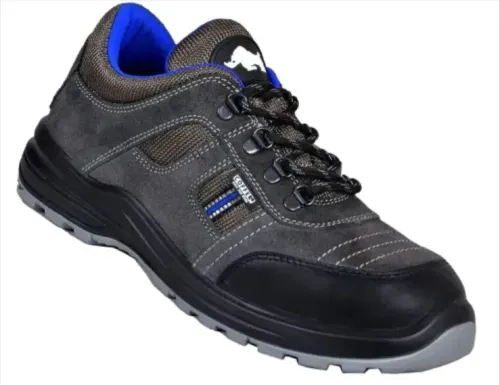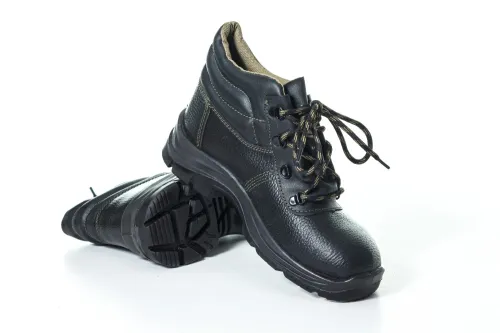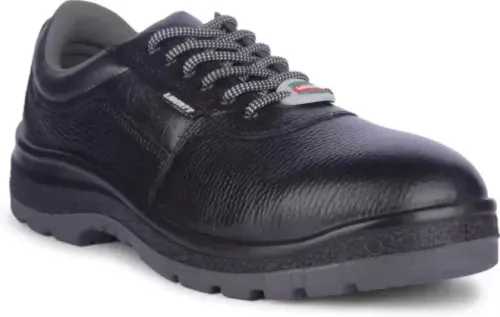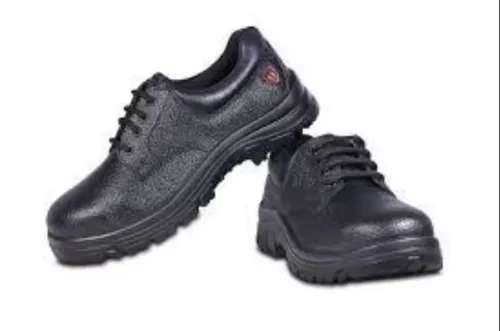
The phrase Industrial Safety Shoes covers a broad range of footwear, but industrial workplaces do not present identical risks. Selecting the appropriate footwear therefore starts with identifying the hazard rather than choosing a model simply because it is labelled for industrial use.
Consider a fabrication workshop and a warehouse. Both may require protective footwear, yet employees may face different combinations of falling objects, movement, floor contamination and working patterns.
The same principle applies across manufacturing and industrial operations in Navi Mumbai, Maharashtra.
For environments where employees work around materials, components or equipment that could create impact hazards, appropriate protective toe construction may be important. Buyers should verify the specifications of the footwear rather than assuming every safety shoe provides the same protection.
Floor conditions are another major consideration.
Industrial floors may be:
- Smooth and dry
- Wet
- Oily
- Dusty
- Uneven
- Exposed to specific process substances
Outsole selection should reflect these conditions. Tread pattern and sole material can influence grip, wear and suitability for the intended workplace.
For employees who walk or stand for extended periods, comfort and fit become important practical considerations. Safety footwear is often worn throughout a shift, so excessive weight, poor sizing or unsuitable construction can affect how willingly employees use it.
Different departments may also need different footwear.
Maintenance personnel may work across several areas of a facility, while production workers may remain near particular machinery. Warehouse staff can cover significant walking distances. Electronics-related workplaces may have electrostatic control requirements that need specialized footwear rather than general-purpose industrial shoes.
This is why a basic workplace footwear assessment is useful. Identify the employee's job, environment, potential hazards and required protective characteristics before selecting the product.
Businesses should also check whether applicable workplace rules, customer requirements or safety standards specify particular footwear characteristics. Product documentation should be reviewed against those requirements rather than relying solely on generic descriptions.
Navi Mumbai's industrial ecosystem includes engineering, logistics, manufacturing, infrastructure and service businesses with varied safety needs. Comfort Shoes provides industrial footwear options for organizations evaluating safety shoes according to specific applications.
After footwear is issued, employees should also inspect it regularly. Worn soles, damaged uppers, exposed components or other deterioration can indicate that replacement needs to be considered.
Selecting safety footwear is ultimately a matching exercise. Start with the hazard, understand the work environment, identify the required footwear characteristics and then compare suitable products. That approach is far more useful than treating every pair of industrial safety shoes as equivalent.
Keywords